The Theme of My Story
My story, Roger Stevens: the Maze of Attendance, captured the chaos of living at the University of Leeds. It was part satire, part survival guide, and all too relatable. As I quipped with my partner during the workshop, "Finding your classroom is harder than passing your exams."
The Story's Structure
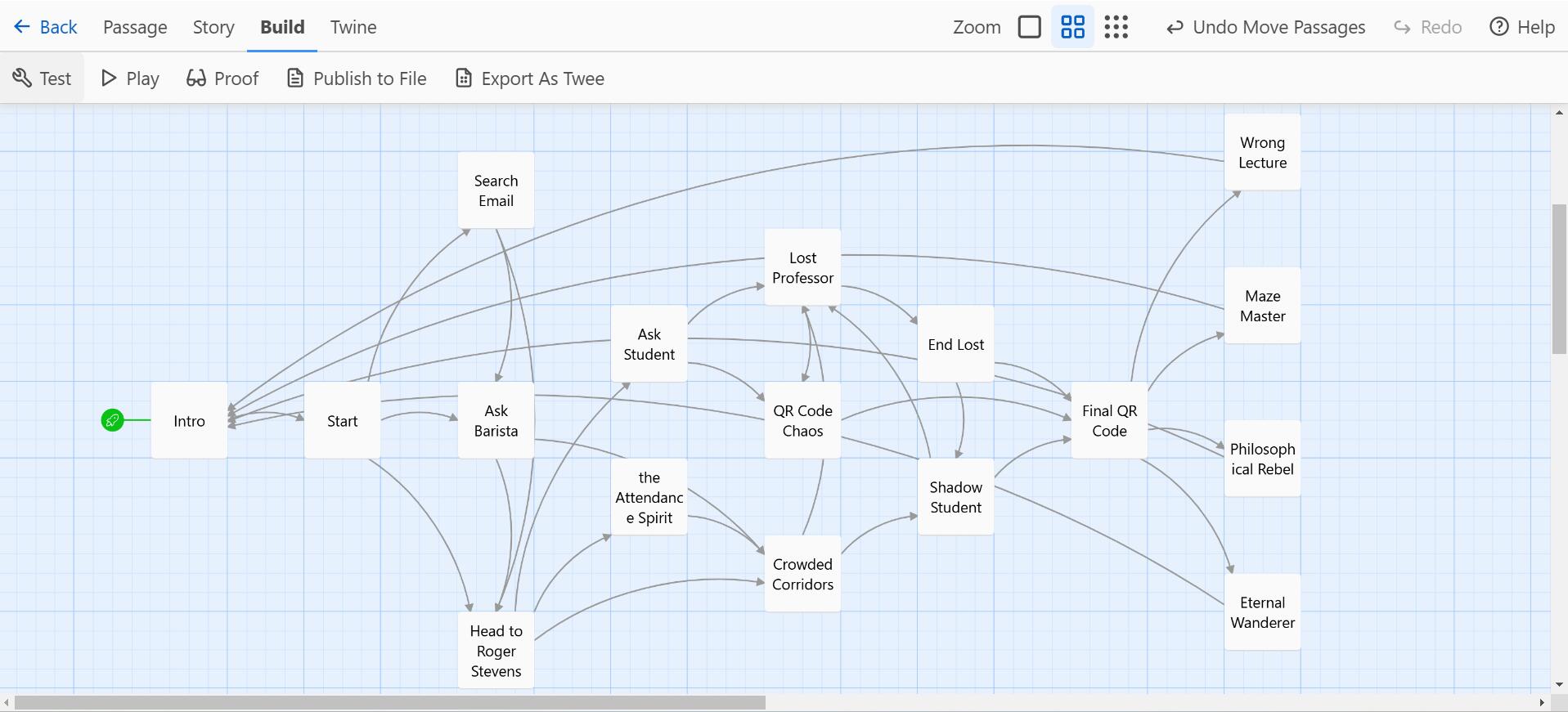
The narrative had the structure of a classic adventure, akin to a D&D campaign:
The Beginning: Setting the Scene
The story starts with a peaceful coffee at Nero Cafe, rudely interrupted by the ominous reminder to log your attendance. You don’t even know where your class is. Time to roll initiative!
The Middle: Encounters and Challenges
- Lost Professor: A fellow adventurer appears—a professor who’s even more lost than you. Together, you form a party to conquer the maze of Roger Stevens.
- Shadow Student: A campus legend. Their casual attitude and mysterious knowledge of the QR code maze made them both a comedic and helpful presence. Some say they’ve hacked the attendance system; others insist they’re just an urban myth. Whether you trusted their shortcuts or not was entirely up to you.
The End: The Final Choice
It seems that you reach your classroom and face the ultimate dilemma: two QR codes. Choose the right one, and you’re victorious. Choose wrong, and it’s game over—or at least a good excuse to head back to Nero Cafe and reflect on life.
At the end, players could unlock one of three titles based on their choices: Maze Master, Philosophical Rebel and Eternal Wanderer.
Key Insights from the Readings
Espen Aarseth (1997)’s concepts of cybertext and ergodic literature aligned perfectly with our experience. Cybertext emphasises the mechanical and interactive nature of texts, where readers become active participants rather than passive observers.
This was evident in Roger Stevens: the Maze of Attendance, where every decision altered the narrative path. Players had to engage with the story actively, embodying Aarseth’s idea of ergodic literature, which demands “nontrivial effort” from its users.
Compared to traditional narratives, cybertext feels more like playing a game of D&D—every choice shapes the story in real time. You’re not just reading a story; you’re creating it.
Final Thought
This workshop reminded me of why I love interactive narratives. They’re not just stories; they’re experiences. Like a great D&D campaign, they let you laugh, struggle, and feel like your choices matter.
Reference
Aarseth, E. J. 1997. Introduction: Ergodic Literature (excerpt). In: Cybertext Perspectives on Ergodic Literature. Baltimore: Johns Hopkins University Press, pp. 1-13. The Twine Cookbook.
Twine. Available from: https://twinery.org/cookbook.